The last swim is behind you. The trees are changing, the nights are cooler and the cottage is beginning to feel quieter. Leaves on the path are part of that picture. Leaves blocking the route water takes off the roof deserve a different kind of attention.
Small Debris, Important Places
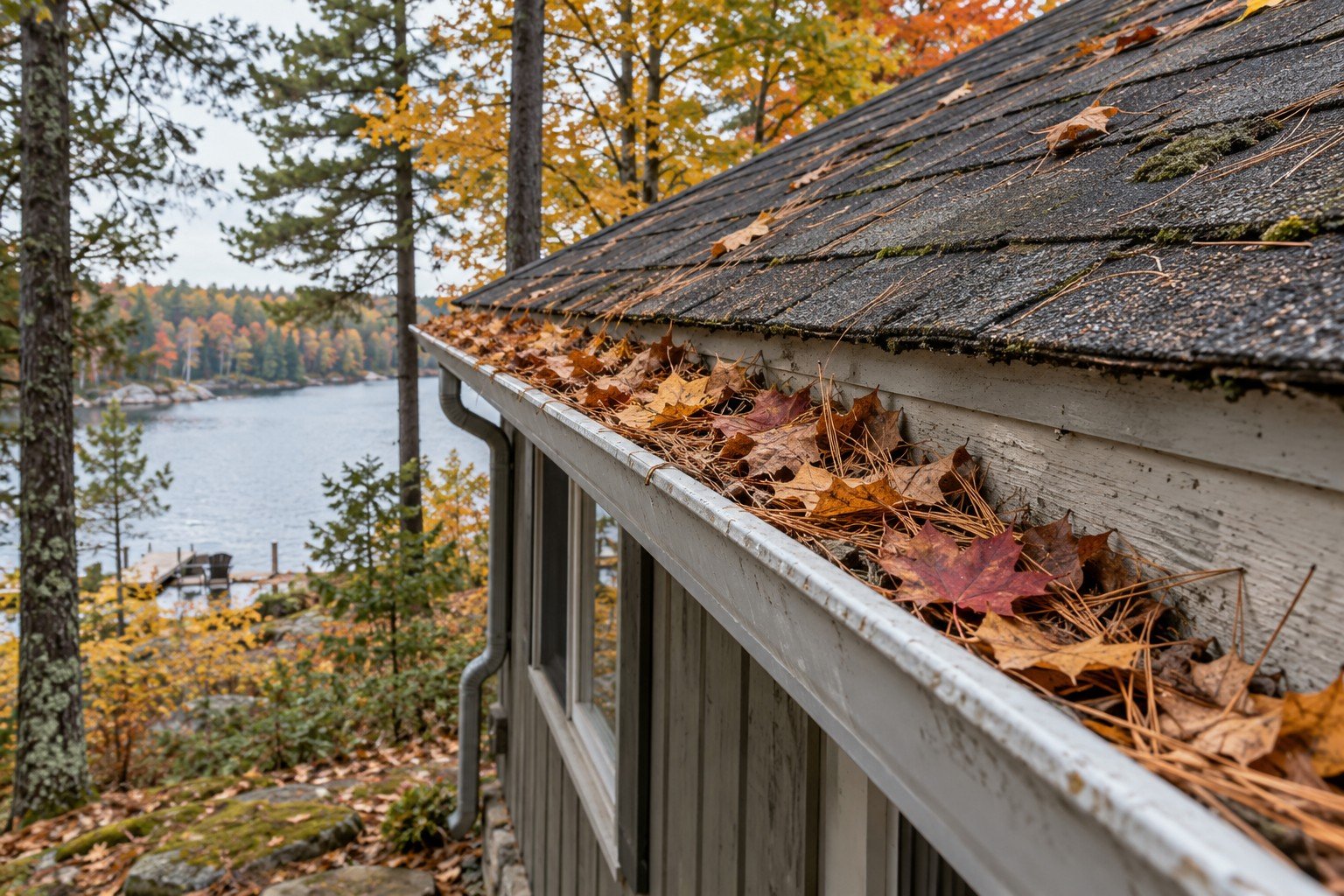
Broad leaves are easy to notice; pine needles can be less obvious. Instead of looking only at the lawn, check where debris collects around the building: gutters, roof-to-wall junctions visible from the ground, deck gaps and the exits of drainage routes.
The Government of Canada recommends checking eavestroughs and downspouts in spring and fall and clearing accumulated debris. Those components collect roof runoff and direct it away from the foundation. Clearing the ground alone does not tell you whether that system is working.
Watch the Cottage in the Rain
A dry afternoon is useful for a walkthrough. A rainy one can show you something different. From a safe place, watch where water leaves the roof, whether it spills over an eavestrough and where it lands beside the cottage.
Note repeated overflow, staining, wet patches or pooling near the building. Photograph what you see and where it happens. Those observations give a contractor a more useful starting point than “something gets wet when it rains.”
Keep the observations separate from the diagnosis. A stain does not establish which detail has failed, and an apparently blocked gutter does not rule out another problem nearby.
Cleanup and Repair Are Different Jobs
Removing debris may solve a blockage. It will not replace a damaged gutter, reconnect a detached downspout or repair deteriorated fascia. If overflow continues after cleaning, the next step is to assess the building detail rather than repeat the same task and hope for a different result.
Ask whether the repair needs to include the adjoining materials. Fresh trim can conceal an unresolved water route, just as a fresh coat of paint can hide a stain without explaining it.
Keep the Ground and Building Connected
Water does not stop being part of the project when it reaches the ground. Discuss downspout outlets, nearby paths, retaining features and the grades beside the cottage together. The building and landscape teams should be working toward the same drainage direction.
For seasonal grounds work, our sister company, Muskoka Landscape Systems, can be part of that conversation. When the problem involves exterior building components, Muskoka Building Systems can help define the assessment and repair scope.
Leave With a Clear List
Before closing up, record what was cleaned, what still needs attention and who will follow up. Keep roof and ladder work for people equipped to do it safely. A short, specific list is more useful than a vague promise to look at the problem next spring.
The reward is not a spotless forest floor. It is knowing that the cottage’s drainage details are being looked after while you are away.
YOUR PROPERTY. YOUR NEXT CHAPTER.
Let’s Talk About Your Plans.
Tell us where you’re building and what you have in mind.
Start a Project